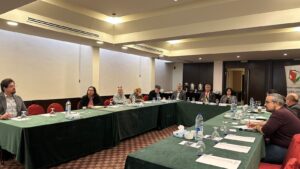
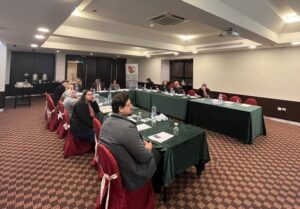
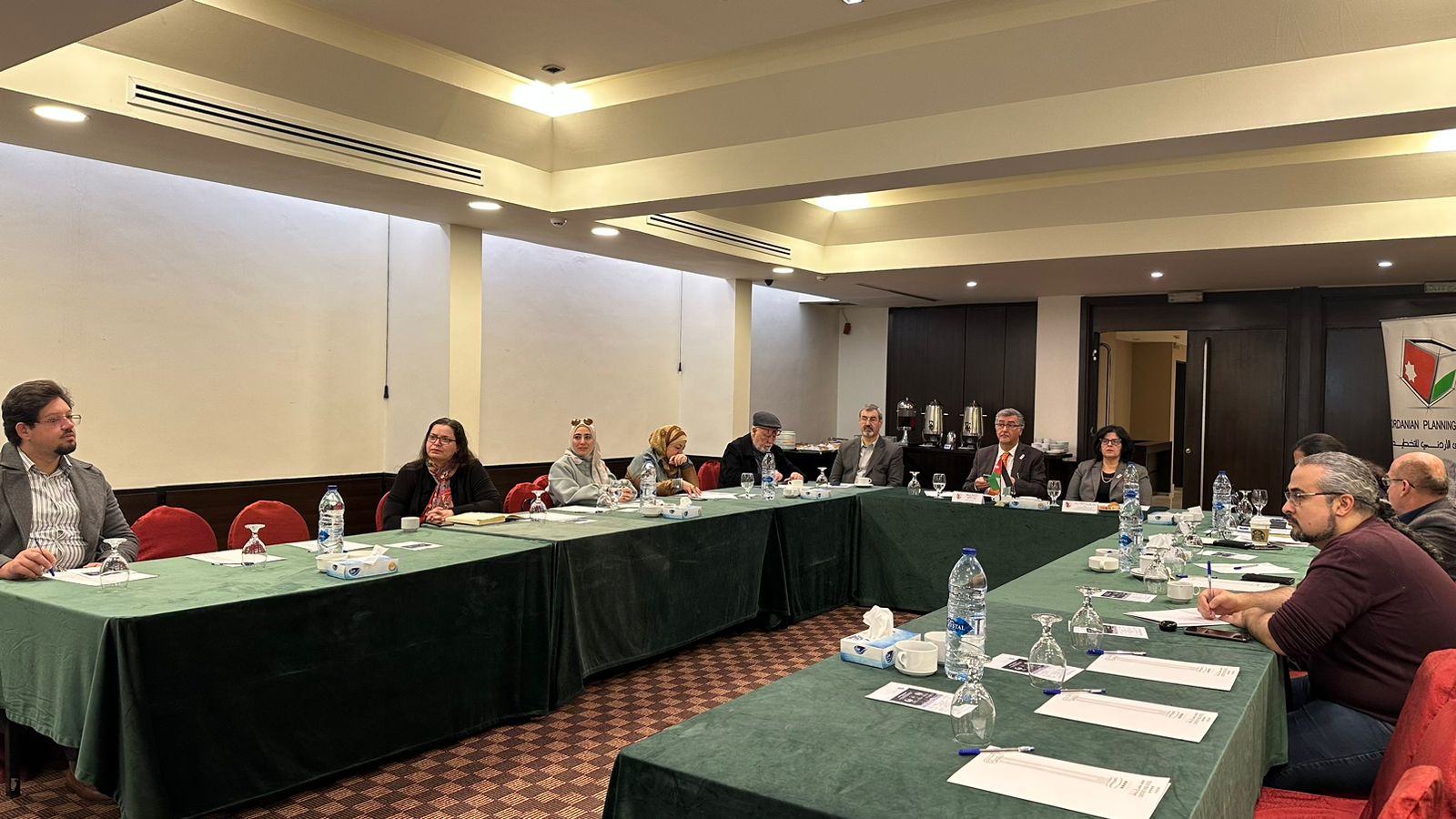
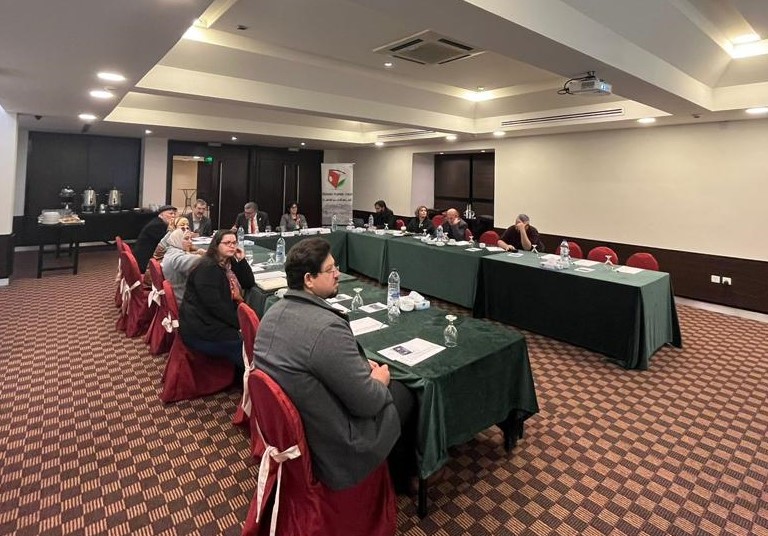
On Saturday, March 18, 2023, the Jordanian Planning Forum held its regular event titled “Saturday Forum” at the Century Park Hotel “Amoun.” The event was focused on “Urban Planning and Public Safety from Natural Disasters – Recommendations Post-Earthquakes in Turkey and Syria.” The forum featured presentations from Dr. Arzu Suzan of Bursa Technical University in Turkey, and Dr. Hanan Al-Nemri, Dean of the Faculty of Engineering at Jordan University of Science and Technology. The session was moderated by the forum’s Secretary-General, Engineer Ahmed Ziad.
In his opening remarks, the forum’s President, Dr. Murad Al-Kalaldeh, emphasized the importance of spatial planning that harmonizes tangible urban elements such as buildings, roads, and services with geography, demographics, and the economy. This role is what the Jordanian Planning Forum, officially registered since its founding in 2011, aims to fulfill.
Dr. Arzu presented scenes from the February 6, 2023, earthquake, which claimed the lives of approximately fifty thousand people in Turkey and resulted in the destruction of 230,000 buildings. The earthquake revealed planning errors that increased the number of casualties and hindered relief efforts. For example, the location of Hatay Airport was unfortunate due to its position on a seismic fault, and road layouts delayed timely relief efforts, forcing locals to take action to save their loved ones during the critical initial 27 hours. She stressed the need for disaster plans that can be quickly activated when necessary and the importance of developing temporary housing systems to shelter affected families, selecting appropriate locations, and supplying them with water and electricity until needed, and connecting them to nearby aid points. The earthquake exposed significant discrepancies in building strength, indicating negligence during design, construction, and engineering supervision stages, which increased the number of innocent victims who lost their lives due to fraud, deception, or failure to implement existing legislation and engineering codes. In terms of urban planning, the necessity of integrating urban rescue concepts during the design stages became evident, as congested streets and the lack of proper guidance hindered rescue operations and increased their costs.
Professor Hanan Al-Nemri delivered a specialized lecture that began with discussing the immense economic damages of earthquakes, which can be reduced by following proper architectural and structural design principles. She pointed out that there is a correlation between the intensity of an earthquake and the number of fatalities, but it is not necessarily a direct relationship, as it depends on many variable factors. She noted that 65% of the fatalities occurred due to building collapses, mentioning that concrete buildings are safer than others but more dangerous than stone structures when they collapse. Dr. Al-Nemri presented maps showing the seismic faults in the Middle East, indicating that Jordan lies to the east of the Rift Valley extending to the earthquake area in Turkey and Syria along the boundary between the Turkish and Arabian plates. Her lecture addressed the importance of site selection for constructions, dividing it into five branches: ground faulting, shaking, liquefaction, disruption, and earthquakes resulting from fires, floods, and hazardous material releases. She presented the seismic fault map produced by the Natural Resources Authority, showing faults intersecting the Araba Valley fault, such as the Zarqa River fault in the north, the Zarqa Ma’in and Siwaqa faults in the center, and the Karak and Wadi Al-Hasa faults and the fault extending southward towards Aqaba. She warned of the dangers of building on or near these faults. To simplify her specialized discussion on earthquake impacts, Dr. Al-Nemri summarized that the intensity of seismic forces is a triangular equation involving the construction site, the nature and use of the structure, and the soil characteristics, all of which can be influenced to achieve safe structures. When asked about buildings in Jordan, she noted that the use of reinforced concrete makes them reasonably safe, but there are concerns that increase their vulnerability, such as relying on natural stone as a cladding material without proper anchoring and elevating the building on columns on the ground floors for parking purposes in some buildings, which weakens the structural integrity. Dr. Al-Nemri also provided recommendations related to urban design, building shapes, and irregularities, emphasizing the need for collaboration between architects and structural engineers at all design stages to achieve cohesive and strong buildings.
During the discussion, attendees commented on the presentations, and the lecturers answered questions. The session moderator summarized the key points, recommending the need to review urban planning regulations in the Kingdom, including laws, systems, and building codes, to learn from the lessons derived from the unfortunate earthquakes in Turkey and Syria.