our story
Historical Background
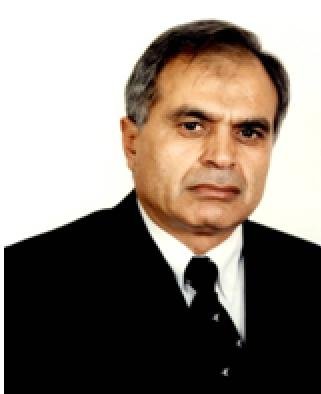
The idea of creating a forum to bring together individuals involved in planning activities within a single organization was initially proposed by Prof. Jameel Aljaloudi and Dr. Murad Kalaldeh, who were faculty members at the Faculty of Planning and Administration at Al-Balqa Applied University. They recognized the significance of integrating planning across various disciplines, such as architecture, urban studies, economics, and statistics, to achieve sustainable spatial planning. Despite the prevalent notion that only architects are responsible for urban planning, the forum’s establishment marked a significant shift towards broader participation in development planning. A group of Jordanian architects and activists embraced the idea and sought support from the Ministry of Social Development, which houses a department called “The Associations Register” with clear procedures for applying for the formation of associations. A founding committee led by Dr. Murad Kalaldeh was formed to submit the application. Following a review, the association was approved on December 14, 2011, and a certification was issued for the “Jordanian Planning Forum.”
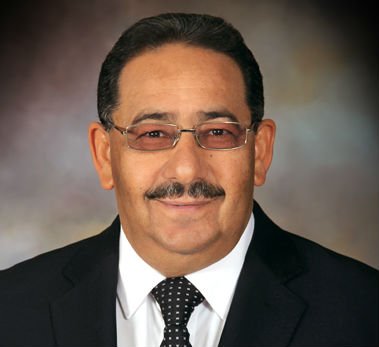
The forum held its first general assembly at Wild Jordan on January 14, 2012. During the assembly, the forum approved its bylaws and elected its first administrative board, which consisted of five members. Dr. Murad Kalaldeh was chosen as the president, Eng. Kamal Jaluqa as the vice-president, and Eng. Baha’ Marji as the treasurer. The Ministry of Interior, the supervising governmental body, officially approved the board in a letter addressed to the capital’s governor and signed by the Minister on January 31, 2012. In its second term, the board elected Eng. Kamal Jaluqa as president on May 17, 2014, and upon his resignation on March 12, 2017, the board elected Dr. Khalid Moumani as president for the third board term. Dr. Murad Kalaldeh returned as president for the fourth term.
In 2018, the Associations Registry in Jordan implemented a new classification system for voluntary civil work. This system categorizes organizations based on their areas of focus, and the Jordanian Planning Forum was placed under the “Urban and Built Environment” category. This category encompasses city planning, human interaction with the environment to meet daily needs, and the development of man-made open spaces, public gardens, roads, infrastructure, buildings, and transportation. Consequently, the forum changed its name to “Jordanian Forum for Environmental Planning” and modified its Bylaw to align with the new categorization.
The general assembly held its annual meeting on May 18, 2024, during which it appointed a fifth board for a two-year term, with Prof. Jameel Aljaloudi serving as president.
Believing in organized planning
The forum distinguishes between urban planning and urban design. Urban planning is comprehensive and requires expertise beyond that of engineers, while urban design is more technical and involves input from engineers. They based their work on existing Jordanian legislation, specifically the law of organizing Cities, Villages, and Buildings No. 79 of 1966, which divides planning into three levels: regional, structural, and detailed structural plans. Planning begins at the country level, taking into account the general trends of the state and whether the administration pattern is centralized or decentralized. Regional plans should indicate the classification of cities as development centers or growth poles, and accordingly, road hierarchy and transportation types are set.
Regional planning is influenced by a country’s natural resources and geographical features, shaping the economic activities that contribute to the national economy. These activities include agriculture, mining, tourism, and trade cities. When a country adopts a development model, it impacts regional plans, which determine land use and the urban development of cities. Once regional plans are approved by municipal councils, governorate councils, central ministries, and the Council of Ministers, they shall be ratified and issued by a law that guarantees their continuity for specific periods and specifies how to update them to ensure their flexibility.
Jordan is a constitutional monarchy, where the King appoints the Prime Minister (PM) to form the government. Since the return of parliamentary life to Jordan in 1989, the government has had to earn the trust of the elected Parliament. The character of each PM influences the policies that might change spatial strategies. Some PMs are pro-centralization, and others are open to granting local administration more powers. With the absence of elected governments and the continuous change of prime ministers, substantial parts of the planning law are frozen to grant them flexibility to apply their policies. The result of such practice is contradictory strategies. Such uncertainty affects the law of local governance No. 22 of 2021, which decides whether to go for decentralized governance or stick to powerful ministries.
Once we have a legalized regional plan, we will need to delve into the details and create structural plans that identify land uses, road networks, sewer networks, ports, graveyards, etc. These plans should be announced to the public, and once approved, planners can proceed with preparing detailed structural plans. We believe that any country that doesn’t follow this procedure will not have a clear direction to follow.
As members of this forum, we believe we can contribute to enhancing spatial planning to foster economic development and influence the development of structural plans for organizing land use and managing urban growth. By doing so, we can work towards realizing our motto: “Good Planning for a Better Jordan.”